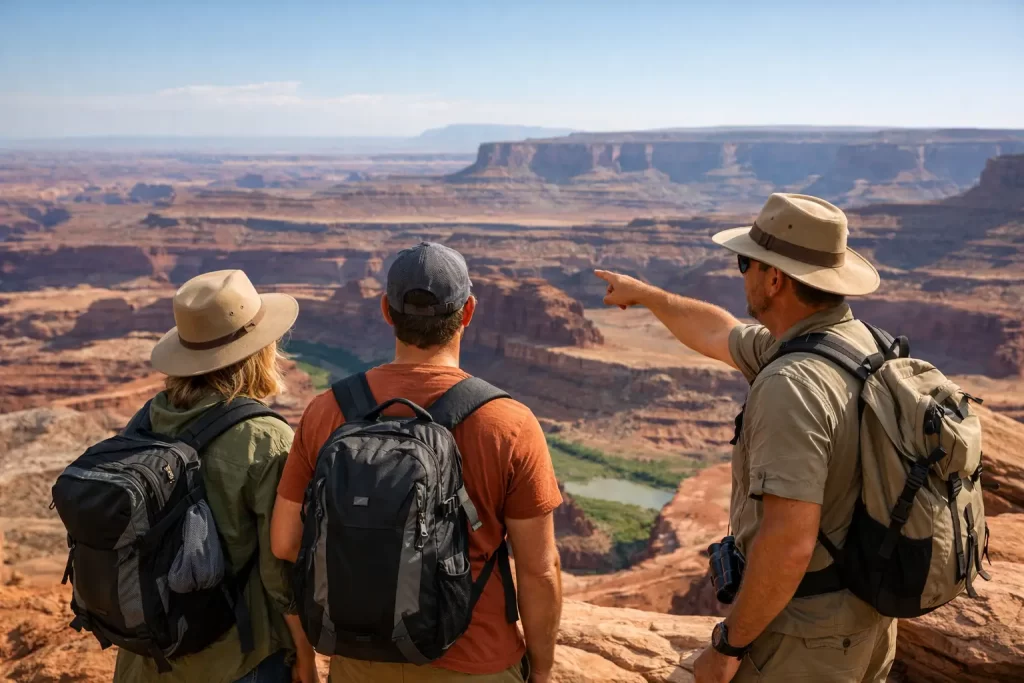
There is a moment at Dead Horse Point when the overlook goes quiet. People stop talking, phones lower for a second, and the Colorado River appears nearly 2,000 feet below, looping through a maze of red rock that looks too dramatic to be real. A Dead Horse Point guided tour helps you get to that moment without spending your day second-guessing routes, viewpoints, timing, or what you are actually looking at.
For many Moab visitors, that is the real value of going with a guide. Dead Horse Point State Park is easy to underestimate because it sits near bigger-name parks. But this landscape delivers one of the most memorable vistas in the region, and it pairs especially well with Canyonlands. The challenge is not whether it is beautiful. The challenge is how to fit it into a short trip, avoid missing the best stops, and understand enough of the place to make it feel like more than a quick photo stop.
Why choose a dead horse point guided tour?
If you are visiting Moab for the first time, the logistics can stack up fast. You are balancing park entry timing, parking, weather, walking distance, road time, and the very real question of whether you are spending your limited vacation hours in the right places. A guided tour removes that friction.
The best tours do more than drive you to the overlook. They organize the day so the park fits naturally with nearby highlights, pace stops around light and crowd patterns, and give context that turns scenery into story. That might mean learning why the mesa sits so dramatically above the river, how erosion shaped the canyons below, or why this area matters within the broader Colorado Plateau.
There is also a comfort factor that should not be overlooked. When someone else handles the itinerary, you can simply watch the landscape change from Moab’s desert floor to high mesas and canyon rims. For couples, families, retirees, and small groups, that can make the day feel noticeably more relaxed.
What a guided experience usually includes
Not every tour is built the same, and that matters. Some operators treat Dead Horse Point as a quick add-on. Others build a more thoughtful route that gives you enough time to enjoy the viewpoints, take photos, and absorb the scale of the place.
A strong guided outing usually includes transportation, park access planning, and a guide who can interpret the landscape in plain English rather than reciting facts at you. In the Moab area, many travelers prefer small-group or private-style formats because they feel less rushed and allow more flexibility at stops. If one guest wants a little extra time at the overlook while another wants help finding the best photo angle, that smaller format makes a difference.
Some tours also combine scenic driving with short walks. That is often the sweet spot for visitors who want more than a windshield tour but do not want a strenuous hiking day. Easy walking can add a lot here because even a short path along the rim opens up different perspectives.
Dead Horse Point guided tour or self-guided visit?
A self-guided visit can absolutely work, especially if you are comfortable planning routes and have enough time in Moab to absorb a few mistakes. The roads are straightforward, and the main overlook is accessible. If your goal is simply to drive in, take in the view, and leave, going on your own may be enough.
But most travelers are not coming all this way for just enough. They want a fuller day, smarter pacing, and the confidence that they are seeing the right things in the right order. That is where a guided option pulls ahead.
The trade-off is simple. Self-guided travel offers maximum independence. Guided travel offers efficiency, local knowledge, and less decision fatigue. If you are short on time, traveling with mixed mobility levels, or trying to pair Dead Horse Point with Canyonlands or other Moab highlights, the guided route is often the better value even if it costs more upfront.
What to look for in the best dead horse point guided tour
The first thing to look at is how much of the day is actually devoted to the park. If Dead Horse Point is one stop among too many, it can feel rushed. You want an itinerary that gives this landscape room to land.
Next, pay attention to group size and walking intensity. Some travelers want scenic overlooks and easy paths. Others want a more active outing with additional walking and extended rim views. A good tour company makes that clear before booking. That clarity matters because the ideal tour for a retired couple may look very different from the ideal tour for a family with teens or a pair of hikers.
Guide quality matters just as much as route design. The best guides know how to read the group, answer practical questions, and share local interpretation without sounding scripted. They explain the landscape, but they also know when to step back and let the view speak for itself.
Finally, look for an operator that understands how Dead Horse Point fits into the larger Moab experience. This is where experienced local companies stand apart. They know which combinations make sense, how to sequence stops for the best light and least wasted time, and where visitors tend to lose time when they try to build the day themselves.
The kind of traveler who gets the most from a guided tour
A Dead Horse Point guided tour is especially well suited to visitors who want to maximize a short stay. If you are in Moab for one or two days, every hour matters. A professionally organized route can mean the difference between seeing one overlook and experiencing a complete cross-section of the region.
It is also a strong fit for travelers who want context, not just scenery. The view is spectacular on its own, but it becomes more meaningful when you understand the forces that carved it and the human stories tied to the land.
And for travelers who prefer comfort, the right tour is a practical choice. You do not need to think about navigation, trail selection, where to stop, or whether your timing is off. You can simply show up ready to enjoy the day.
That is one reason companies like Moab In A Day resonate with so many visitors. The appeal is not just transportation. It is having a better organized, more complete experience led by people who know this region well.
Timing, light, and the pace of the day
Dead Horse Point looks different throughout the day. Morning can feel crisp and spacious, with softer light defining the layers of canyon walls. Midday tends to flatten color a bit, though the views remain huge and clear. Late afternoon and sunset are often the most dramatic, with warmer tones across the rock and longer shadows building depth.
This is where guided timing can be a real advantage. A good operator knows when the overlook is likely to be busiest, how seasonal conditions affect the experience, and whether it makes sense to pair the park with another destination before or after. That kind of pacing sounds like a small detail until you compare a well-timed stop with one that feels crowded, harshly lit, or squeezed between other obligations.
Weather also matters more than some visitors expect. Moab’s high desert climate can bring intense summer heat, sharp winter wind, and quick weather changes in shoulder seasons. Going with a guide helps you adapt without losing the shape of the day.
Is it worth paying more for a premium tour?
Often, yes, especially if premium means smaller groups, better pacing, and more meaningful stops. The cheapest tour is rarely the best value if it leaves you rushed, underinformed, or sitting through a generic itinerary built for volume instead of experience.
A premium guided day should feel intentional. The transportation should be comfortable. The stops should make sense. The guide should feel like a seasoned host, not just a driver on a schedule. If that is what you are getting, the higher price usually pays for itself in ease and quality.
That said, it depends on your travel style. If you are deeply independent, already know the area, and enjoy planning, you may not need that extra level of service. But if your goal is to see the best of Moab with less stress and more substance, paying for expertise can be a smart decision.
Making the most of your visit
If you book a guided tour, arrive ready for changing conditions. Bring water, sun protection, a light layer, and shoes you are comfortable walking in, even if the day is mostly scenic driving. If photography matters to you, mention it. Good guides can often help you make the most of timing and vantage points.
It also helps to be honest about your pace. Not everyone wants the same mix of viewpoints, walking, and time in transit. The better your operator understands your group, the better they can match the experience to your day.
Dead Horse Point does not need hype. It needs time, good timing, and someone who knows how to frame what you are seeing. When that comes together, the park feels less like a stop on the way to somewhere else and more like one of the reasons people remember Moab so vividly long after the trip is over.