At Arches, the month you choose changes almost everything – how long you wait at the gate, how comfortable your hike feels, what the light looks like on the fins, and whether your day feels relaxed or rushed. If you are deciding when to visit Arches National Park, the real answer is not one perfect season for everyone. It depends on whether you care most about cooler hiking weather, lighter crowds, better sunrise and sunset color, or a smoother sightseeing day with less stress.
This is one of the most visually dramatic parks in the country, but it is also one of the easiest to misread on a trip-planning spreadsheet. A spring day can be glorious and jam-packed. A summer afternoon can be brutally hot, then turn magical by evening. A winter visit can feel wonderfully open, but some travelers are surprised by wind, cold starts, and shorter daylight. The best time is the one that matches how you want to experience Moab.
When to visit Arches National Park for the best overall experience
For most travelers, the sweet spots are spring and fall. March through May and late September through early November usually offer the best balance of comfortable temperatures, full access to overlooks and trails, and the kind of light that makes the park look even more unreal in person.
Spring is especially popular for a reason. Daytime temperatures are often ideal for sightseeing and moderate hiking, wildflowers can appear in good years, and longer daylight gives you room to fit in more stops. The trade-off is crowds. This is one of the busiest times in Arches, especially during school breaks and weekends. If your goal is to see the park efficiently without feeling like you are spending half your morning in lines or circling parking lots, timing matters just as much as season.
Fall is the other standout. September can still be hot in the middle of the day, but late September through October often delivers excellent touring conditions. The crowds are still real, but many visitors find fall slightly easier than peak spring. For couples, retirees, and travelers who want a comfortable sightseeing pace with iconic views and manageable walking, fall is often the easiest recommendation.
Spring in Arches: beautiful, busy, and worth planning carefully
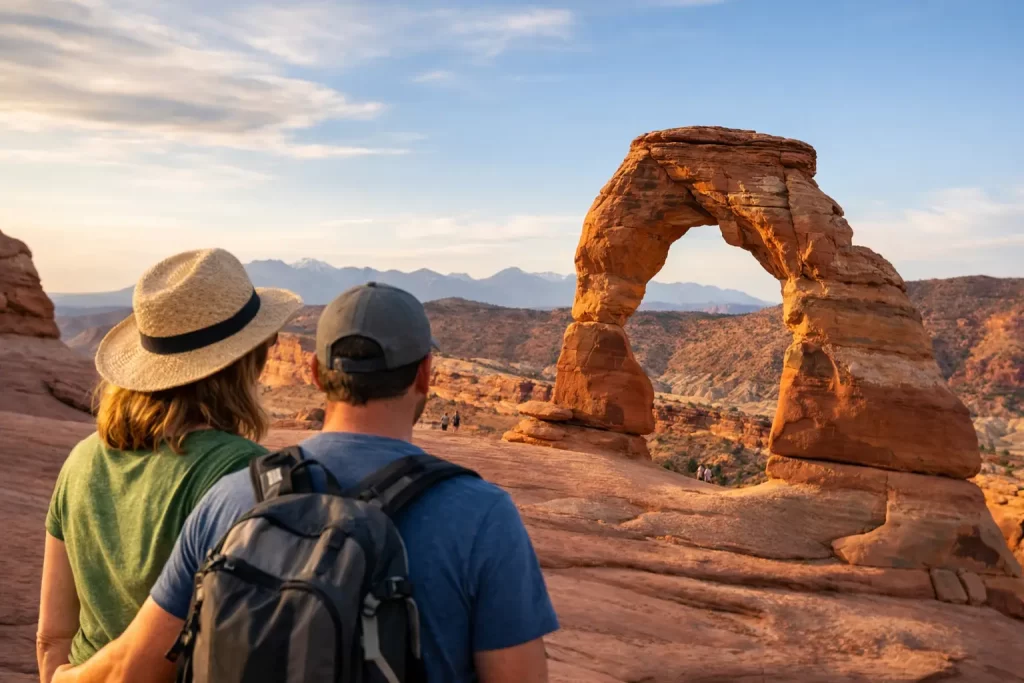
Spring is when many first-time visitors picture Arches at its best. The temperatures are usually kind to hikers, the sky often stays clear, and the red rock colors feel especially sharp in the clean desert light. If your top priorities are hiking to landmarks like Delicate Arch or Devil’s Garden and spending full days outside, spring earns its reputation.
But spring also asks more from your planning. Entrance traffic can back up. Parking at major trailheads fills early. Popular viewpoints feel less quiet than many visitors expect from a national park in the desert. If you are traveling during March, April, or May, the best experience often comes from starting early, avoiding the most crowded windows, and building a realistic itinerary instead of trying to force too much into one day.
This is where a well-organized tour can make a noticeable difference. Instead of spending your energy on route choices, parking strategy, and clock-watching, you can focus on the scenery and the stories behind it. For travelers with a short Moab stay, that efficiency matters.
Summer in Arches: better than people say, if you do it right
Summer gets dismissed too quickly. Yes, June through August can be intensely hot. Midday hiking is often uncomfortable and, on some days, simply not wise for many visitors. Exposed trails feel hotter than the air temperature suggests, and shade is limited in much of the park.
Still, summer can work very well for travelers who shape the day around the desert instead of against it. Early mornings are quieter and cooler. Evenings can be spectacular, especially if you want warm light on the rock formations and a slower scenic drive after the hottest hours have passed. Families tied to school schedules often do very well in Arches by focusing on shorter walks, scenic stops, and sunset-friendly timing.
If you visit in summer, think comfort first. This is the season for carrying more water than you think you need, choosing easier walks in the heat, and being honest about your group’s pace. Travelers who want a polished experience without the guesswork often prefer a guided format in summer because logistics, timing, and stop selection matter more when the heat is working against you.
Fall in Arches: the easiest season to recommend
If someone asks us for the simplest answer to when to visit Arches National Park, fall is often it. October in particular can be excellent. Days are commonly pleasant for hiking and sightseeing, mornings feel crisp without being harsh, and the overall rhythm of the park tends to feel a bit more comfortable than peak spring.
Fall is especially good for mixed-interest groups. Maybe one person wants a scenic drive with frequent photo stops while another wants a longer walk. Maybe you have parents who prefer easier terrain and adult kids who still want a bit of adventure. Fall gives you the widest margin for building a satisfying day without the weather forcing extreme choices.
Photographers also tend to love this time of year. The lower sun angle brings out texture in the sandstone, and sunrise and sunset color can be outstanding. If your ideal trip includes both iconic viewpoints and a little breathing room, fall deserves serious consideration.
Winter in Arches: quiet, underrated, and not for everyone
Winter is Arches’ most underrated season. From roughly December through February, you can find a calmer park, easier parking, and a very different kind of beauty. A dusting of snow on red rock is unforgettable. Even without snow, the low winter light adds contrast and depth that many photographers prefer.
The trade-off is comfort and flexibility. Mornings can be cold, wind can make easy walks feel sharp, and daylight is shorter, which limits how much you can comfortably fit into one day. Some travelers love that quieter, more reflective mood. Others feel they are spending too much time layering up and watching the clock.
Winter is an especially strong option for visitors who care more about scenic touring than long hikes. If you want overlooks, short walks, and a less crowded park experience, it can be a smart choice. Just pack for changing conditions and keep expectations flexible.
Best time for hiking, photography, and easy sightseeing
Different goals point to different seasons. For hiking, spring and fall are usually best, with fall having a slight edge for travelers who want comfort without peak spring intensity. For photography, spring and fall are excellent, but winter can surprise you with dramatic light and cleaner compositions due to lower visitation. For easy sightseeing and scenic drives, fall and winter are both strong, depending on your cold tolerance.
Summer can still be worthwhile for sightseeing-focused visitors, especially if your group includes limited-mobility travelers or anyone who prefers shorter walks. In that case, the best strategy is often a morning or evening schedule with carefully chosen stops rather than a long, exposed hiking plan.
Timing matters as much as season
One truth about Arches catches many people off guard: the hour of your visit can matter almost as much as the month. A spring afternoon can feel crowded and tiring, while an early summer morning can feel smooth and surprisingly pleasant. A winter visit with good light and no rush can outperform a technically better season with bad timing.
That is why the strongest Arches itineraries are built around flow. You want the right stops at the right times, with realistic walking expectations and enough flexibility for weather, traffic, and energy levels. Visitors who try to improvise everything on arrival often end up seeing less, not more.
If you only have one day in the Moab area, it helps to think beyond Arches in isolation. Many travelers also want to see Canyonlands, Dead Horse Point, or a sunset location that rounds out the trip. A carefully organized day can make the entire region feel more accessible and more meaningful, especially when a local guide knows how to sequence the highlights without wasting time.
So, when should you go?
If you want the broadest recommendation, choose late spring or fall. If you want fewer crowds and do not mind cold mornings, winter can be a great value. If summer is your only option, go early, stay flexible, and plan around the heat instead of pretending it is not there.
The best Arches trip is not about chasing a perfect month on paper. It is about matching the season to the way you want to travel – more hiking, more comfort, more photography, less stress, or the most scenery in the time you have. And if you want that day to feel easy from the first overlook to the last, having locals who know the pace of the park can turn a good visit into a much better one.
Whatever season you choose, Arches rewards travelers who give the day a little thought before they arrive.