
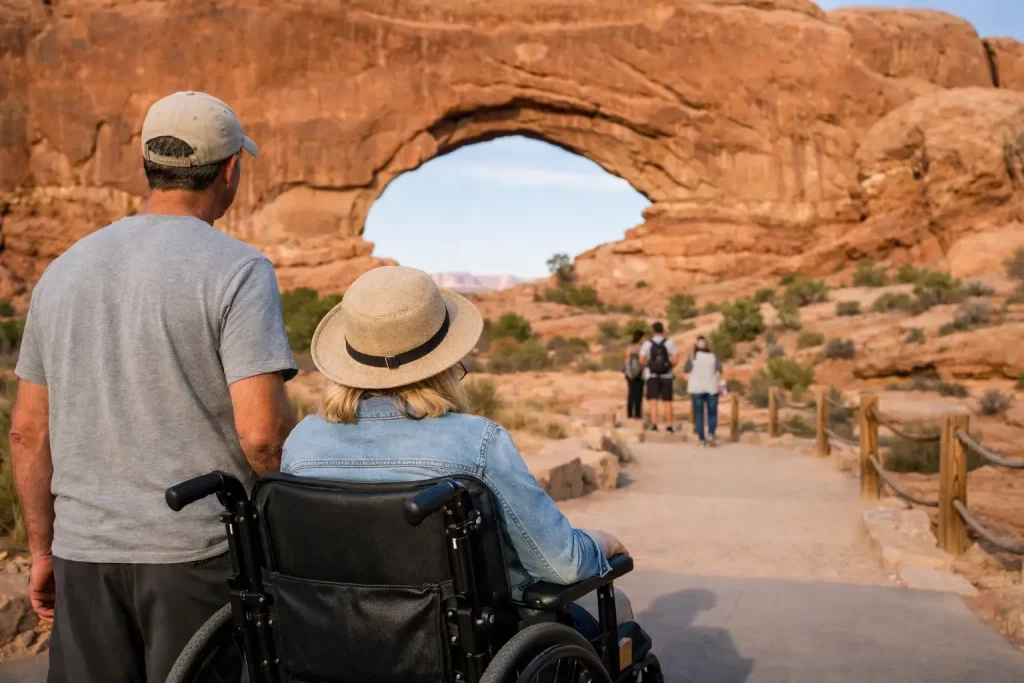
You do not need to hike miles or scramble over slickrock to have a memorable day in Arches. The right arches tour for limited mobility is built around smart routing, scenic access, shorter walks, and a guide who knows where the best views are without asking you to overdo it. In a park this visually dramatic, comfort and great sightseeing can absolutely go together.
That matters more than many first-time visitors realize. Arches National Park looks simple on a map, but the experience can be surprisingly physical if you try to piece it together on your own. Distances between stops add up, parking can be frustrating, and some of the most famous names in the park are attached to trails that are not a fit for every traveler. A well-designed limited mobility tour solves that problem by focusing on what guests can enjoy, not on what they have to skip.
What makes an Arches tour for limited mobility work
The best tours are not just shorter versions of hiking trips. They are planned differently from the ground up. That starts with vehicle time being used well, so guests see a lot of the park without feeling rushed or exhausted. It also means choosing overlooks, roadside viewpoints, and easy stops that still deliver the big red rock scenery people came to Moab to see.
A strong itinerary usually balances scenic driving with a handful of optional short walks. That word optional matters. Some travelers are comfortable with flat, brief walks from a parking area to an overlook. Others want as little walking as possible. Good tour design leaves room for both, and good guides adjust in real time.
Comfort is part of the value too. In Arches, sun exposure, uneven footing, and limited shade can wear people down quickly. Small-group touring with organized stops, help getting in and out, and thoughtful pacing often makes the day feel easier than self-driving, even when the sights are the same.
What you can usually see without strenuous hiking
A lot, frankly. One of the biggest misconceptions about Arches is that if you cannot do the longer hikes, you will only catch a few partial views from the road. In reality, many of the park’s most impressive formations can be appreciated from scenic viewpoints, pullouts, and short-access areas.
Park Avenue is a good example. Even if you do not hike the full trail, the overlook gives you a dramatic introduction to the scale of the landscape. Balanced Rock is another classic stop, and for many visitors it offers a high reward for very modest effort. Windows area viewpoints can also be worthwhile, depending on current conditions and the guest’s comfort level. The terrain there may still require some caution, so this is where honest communication with your guide really helps.
Farther along the park road, there are wide-open views of fins, towers, and distant snowcapped ranges that require little more than stepping out for photos. For many guests, that combination is exactly right – more scenery, less strain, and enough time at each stop to actually enjoy it.
Not every famous stop is the right fit
This is where expectations matter. If your main goal is seeing Delicate Arch up close on foot, a limited mobility tour may not be the right match. The trail to the arch is famous for a reason, but it is not an easy walk. Trying to force a hiking-centered expectation into a comfort-centered trip usually leads to disappointment.
That does not mean you miss out on the spirit of the park. It means the experience is curated differently. A guide can help you prioritize the viewpoints and accessible highlights that offer the strongest payoff for your time and energy. In many cases, guests end the day feeling like they saw more than they would have on their own because the route was organized around realistic access, not wishful planning.
There is also a practical side to this. National park visits are better when the pace fits the traveler. Doing less walking but seeing more landmarks is often the smarter trade-off, especially for retirees, multigenerational families, and visitors managing pain, fatigue, recent injuries, or balance concerns.
How much walking is typical
The honest answer is that it depends on the specific tour and the specific guest. “Limited mobility” can describe a wide range of needs. Some travelers use a cane and can handle short paved or packed-surface walks. Others prefer sightseeing almost entirely from the vehicle with only brief stops for photos. Some are traveling with a spouse or group that wants a mix of both.
That is why the most useful tour descriptions do more than say “easy.” They tell you the expected walking distance, whether surfaces are paved or uneven, how often guests get in and out of the vehicle, and whether stops can be skipped without losing the full experience. If a company cannot explain those details clearly, keep asking questions.
In general, a limited mobility format should involve short walking segments, frequent scenic viewing from or near the vehicle, and enough flexibility to reduce exertion as needed. Heat, season, and time of day also affect how easy a stop feels. A short walk in cool morning light is very different from the same walk under midday summer sun.
Why guided touring makes the day easier
Arches is one of those parks where logistics quietly shape the whole experience. Entry timing, parking turnover, traffic, and stop order all matter. Visitors handling mobility limitations often feel those issues more sharply because backtracking, waiting for space, or walking farther from overflow parking can change the day from enjoyable to tiring very quickly.
That is where guided touring earns its keep. You are not just paying for transportation. You are paying for a cleaner route, better pacing, local judgment, and a guide who knows when to shift the order of stops to keep the experience comfortable. You are also gaining context along the way – geology, human history, and the stories behind the formations – instead of just pulling over, snapping a photo, and moving on.
For many guests, that mix of comfort and interpretation is the difference between checking off a park and truly experiencing it. A well-run tour can feel both efficient and personal, especially in a smaller group where there is time to adapt.
Choosing the right tour without guessing
When you compare options, look past broad promises and focus on the trip design. Ask how long you will be out, what the longest walk is, whether walking is required at every stop, and how the company handles guests with different ability levels traveling together. If your mobility is limited but not identical from day to day, say that. A good operator will want the real picture.
It also helps to ask what “seeing Arches” means on that particular tour. Some products spend more time driving and orienting guests to the park. Others aim for a fuller stop count with easy walks built in. Neither approach is automatically better. The right choice depends on whether you want a relaxed scenic overview or a more complete sightseeing day with light movement.
This is also the kind of experience where smaller is usually better. Large bus-style tours can be less flexible, while a premium small-group format often allows for better communication, smoother timing, and more room for traveler comfort. That is especially valuable when mobility needs are part of the planning.
A better day in the park starts with realistic planning
One of the kindest things you can do for yourself on a Moab trip is choose the experience that fits your body, not the one that sounds most ambitious on paper. An arches tour for limited mobility should leave you feeling included, not sidelined. It should show you major scenery, give you excellent photo opportunities, and let you enjoy the park’s scale and beauty without turning the day into a test of endurance.
That is exactly why this style of touring matters. It respects the fact that travelers experience national parks in different ways, and that comfort, access, and strong guiding can open the door to a richer visit. Companies like Moab In A Day understand that seeing more does not always mean walking more. Sometimes it means planning better, pacing better, and having a local guide who knows how to make every stop count.
If you are deciding whether Arches is still worth it with limited mobility, the answer is yes – especially when the day is built around what makes travel enjoyable in the first place: great views, good company, and enough ease to actually take it all in.